
Published on 01/22/26
POWERED BY MOST TRUSTED LOGISTICS COMPANIES
THE MOCKINGBIRD TIMES
Temperature Control Excellence. Cargo Security Guaranteed.
❄️ HEADLINE STORY: The Temperature Factor You're Overlooking
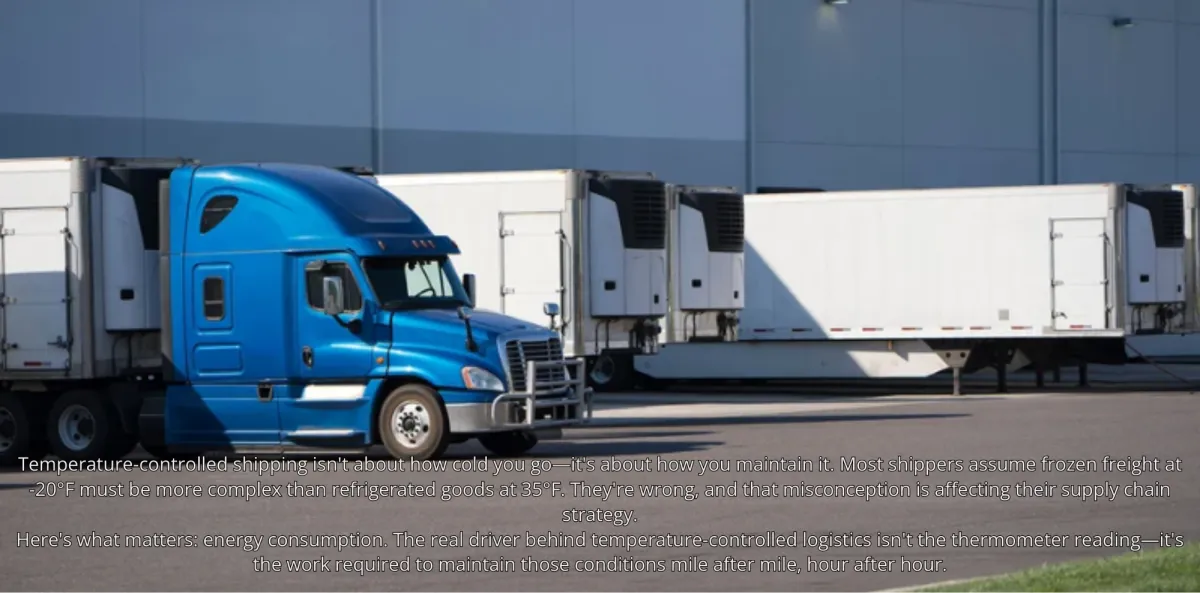
Fresh and refrigerated freight (32-36°F) often represents the most demanding temperature-controlled challenge. Why? Because maintaining that narrow window requires continuous cooling. The temperature control unit runs constantly, burning fuel and energy without pause. A single degree of fluctuation could compromise product integrity for fresh produce, pharmaceuticals, or premium meats.
Frozen freight (-20 to 0°F), despite its extreme temperatures, typically operates more efficiently. Advanced trailer insulation combined with strategic pre-cooling creates an environment where stop-start cooling cycles work effectively. The unit activates when thresholds are reached, then shuts down while insulation maintains the frigid interior. Less fuel. Less energy. More efficiency.
External conditions amplify every challenge. That same frozen load crossing Arizona in July forces cooling units into overdrive. Conversely, maintaining above-freezing temperatures through Minnesota winters demands constant vigilance. Geographic realities and seasonal timing directly impact operational complexity.
Mockingbird Logistics, LLC—proudly part of Sureway and ATS—brings 70+ years of temperature-controlled expertise to every shipment. Our modern fleet features state-of-the-art refrigeration technology designed for maximum energy efficiency. We understand that proper pre-cooling, equipment maintenance, and route optimization aren't optional—they're essential to protecting your cargo's integrity from origin to destination.
When temperature control matters, trust the logistics partner who monitors every degree with precision and protects every load with commitment.
⛽ OIL OUTLOOK: The Forecast Firms Up
Energy markets continue their downward trajectory as analysts refine 2026 projections. The U.S. Energy Information Administration forecasts Brent crude around $55 per barrel in early 2026, with supply growth significantly outpacing global demand increases.
Recent data shows global oil stocks building by an average of 2.6 million barrels per day throughout late 2025, creating substantial inventory cushions that should stabilize markets well into next year.
For temperature-controlled logistics, this environment presents opportunity. Lower diesel expenses can improve operational efficiency across refrigerated fleets, though the relationship isn't linear—reefer units consume fuel based on cooling demands regardless of market conditions.
What this means for strategic planning: while fuel expenses may moderate, the fundamental economics of temperature control remain unchanged. Continuous cooling still demands significant energy. Extreme weather conditions still force units to work harder. Equipment efficiency still separates premium providers from budget alternatives.
Smart shippers recognize that true value in temperature-controlled logistics comes from operational excellence, not just favorable fuel markets. Modern equipment, preventive maintenance, and expert route planning deliver consistent results regardless of oil price fluctuations.
📊 LOGISTICS INTELLIGENCE
Pre-Cooling: The Hidden Efficiency Multiplier Trailer pre-cooling gets discussed frequently, but freight pre-cooling deserves equal attention. Cooling your commodity before loading dramatically reduces the temperature control unit's workload during transit. This simple step minimizes energy consumption, enhances temperature stability, and demonstrates operational sophistication that separates strategic shippers from reactive ones.
Equipment Age Matters More Than Most Realize Older refrigeration units don't just work less efficiently—they create cascading operational challenges. Fuel consumption increases. Temperature fluctuations become more common. Maintenance issues arise at inconvenient moments. When evaluating logistics partners for temperature-controlled freight, ask direct questions about fleet age, maintenance schedules, and equipment upgrade programs. Modern technology delivers measurable advantages.
The Stop-Start vs. Continuous Decision Understanding which cooling method your freight requires transforms how you approach temperature-controlled logistics. Commodities with strict temperature tolerances—fresh produce, certain pharmaceuticals, premium dairy products—demand continuous cooling. The unit runs constantly. Fuel consumption stays high. There's no workaround. Other products function perfectly with stop-start cooling, where the unit cycles on and off based on temperature thresholds. Know your product requirements. Specify them clearly. Pay for what you need, not what you don't.
Seasonal Planning Prevents Crisis Management Harvest seasons predictably strain refrigerated capacity. Holiday demand creates similar pressure. Winter weather in northern regions adds complexity for maintaining above-freezing temperatures. Summer heat across southern routes challenges frozen freight operations. None of this should surprise anyone, yet reactive shippers face these challenges unprepared year after year. Strategic shippers book capacity in advance, secure favorable terms during off-peak periods, and build seasonal planning into their annual logistics strategy.
Temperature Optimization Starts With Specifications Overcooling wastes resources without adding value. Setting a frozen product at -30°F when -10°F meets requirements burns excess fuel for zero benefit. Conversely, attempting to save through insufficient temperature control risks product damage that dwarfs any logistics savings. Work with your quality team to establish actual temperature requirements based on product characteristics and transit duration. Optimize within that range—never below it.
The Insulation Advantage Superior trailer insulation isn't glamorous, but it's transformative. Proper insulation reduces temperature transfer between the trailer interior and external environment. This means cooling units work less. Energy consumption drops. Temperature stability improves. When vetting temperature-controlled logistics partners, insulation quality should rank alongside refrigeration technology in your evaluation criteria.
Load Planning Fundamentals Empty trailer space in temperature-controlled shipping represents wasted opportunity. Consolidating LTL shipments into partial or full truckloads spreads operational expenses across more product. Strategic load planning considers seasonal patterns, lane frequencies, and complementary commodity combinations. Done well, it transforms logistics from expense center to competitive advantage.
🏆 INDUSTRY SNAPSHOT: Temperature-Controlled Commodities
Temperature-controlled logistics serves remarkably diverse industries. Consider the range: alcohol requiring freeze protection during winter transit, batteries and electrical components sensitive to heat exposure, fresh flowers maintaining peak quality, pharmaceutical products demanding exact temperature maintenance, and frozen foods staying rock-solid from processing plant to retail freezer.
Each commodity brings unique requirements. Fresh meat and dairy products need refrigeration with tight tolerances. Ice cream requires sub-zero temperatures without fluctuation. Chemicals and adhesives might need protection from both heat and cold depending on formulation. Cosmetics demand stability to preserve texture and efficacy.
The versatility of modern temperature-controlled logistics enables this diversity. Advanced refrigeration technology, precise monitoring systems, and operational expertise combine to move vastly different products safely and efficiently. Understanding these commodity-specific requirements separates adequate temperature-controlled providers from exceptional ones.

ABOUT MOCKINGBIRD LOGISTICS, LLC
Temperature Precision. Cargo Security. Unwavering Commitment.
As a proud member of the Sureway and ATS family, Mockingbird Logistics, LLC brings over seven decades of transportation excellence to every temperature-controlled shipment. Our modern refrigerated fleet features the latest cooling technology, advanced insulation, and fuel-efficient systems designed for optimal performance across all temperature ranges.
We understand that temperature-controlled logistics isn't just about equipment—it's about expertise. Our team monitors external conditions, optimizes cooling cycles, and maintains constant communication throughout transit. From pharmaceutical-grade precision to bulk frozen goods, we protect your cargo's integrity at every temperature, on every mile, during every season.
Our temperature-controlled capabilities include:
Fresh/refrigerated freight (32-36°F) with continuous monitoring
Frozen goods transport (-20 to 0°F and below) with pre-cooling protocols
Freeze/heat protection for temperature-sensitive commodities
Seasonal route optimization for weather-related challenges
Real-time temperature tracking and documentation
Modern fleet with superior insulation and efficient refrigeration
When product quality depends on temperature control, trust the logistics partner who never compromises on cargo security.
Contact Mockingbird Logistics, LLC today—because every degree matters.
Mockingbird Logistics, LLC, a proud part of Sureway and ATS, is committed to delivering excellence in logistics and supply chain solutions.

Temperature Control Excellence. Security Guaranteed. Mockingbird Logistics.
POWERED BY MOST TRUSTED LOGISTICS COMPANIES